Hello Insight
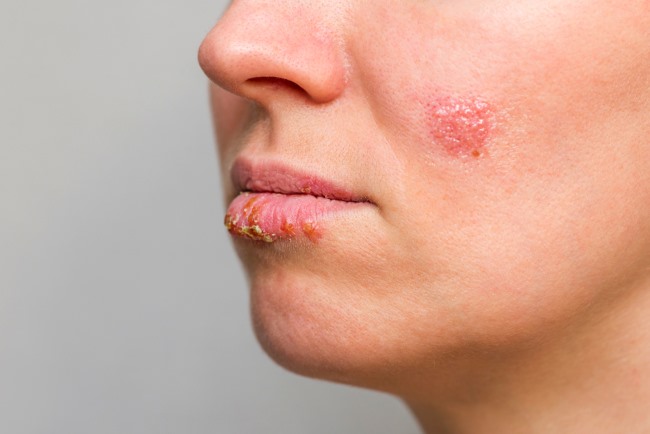
Herpes on the face is a viral infection that causes blisters on the facial skin. This infection can arise due to a new infection or the awakening of an old virus that is "sleeping" in the body and becomes active again. Even though it is not dangerous, herpes on the face still needs to be treated appropriately to prevent complications.
Herpes on the face often appears as small, painful, fluid-filled blisters. Blisters usually appear around the mouth, nose, cheeks, chin, or other areas of the face. Apart from that, herpes can also be accompanied by complaints of fever, muscle aches, swollen lymph nodes in the neck, or sore throat.
Causes of Herpes on the Face and Transmission
Herpes on the face, or also known as oral herpes, is caused by the herpes simplex virus (HSV). This condition is generally triggered by HSV type 1 (HSV-1) and most often attacks the area around the mouth and face.
Although rare, HSV type 2 (HSV-2), which usually causes genital herpes, can also cause facial infections.
The herpes simplex virus can be transmitted to the face in the following ways:
- Direct contact with a blister or wound infected with the virus, for example through kissing or skin touching
- Share personal items, such as towels, cutlery, or lip balm, with other people
- Touching the infected area then touching your face without washing your hands
- Exposure to saliva from an infected person, even when symptoms have not yet appeared
Herpes on the face can affect anyone, but is more common in children. Transmission is generally through direct contact, for example when an adult who has oral herpes kisses their child or shares eating utensils, such as spoons or cups.
The virus can be transmitted to children because their immune system is still developing, so they are more susceptible to contracting the herpes simplex virus.
How to Treat Herpes on the Face
Even though it is often considered mild, herpes on the face still needs to be treated. If not treated properly, the infection can spread to the eyes, which risks causing ocular herpes and vision problems, or even to the brain. If the virus reaches the brain, serious complications, such as HSV encephalitis, meningitis, or meningoencephalitis, can occur. In addition, research shows that herpes infections of the face and mouth, especially recurrent ones, can increase the risk of developing several types of cancer, such as oral cancer and neck cancer. Therefore, it is important to treat herpes appropriately and maintain the body's immune system so that the virus does not easily reactivate. The following are ways to treat herpes on the face that can be done: The main treatment for herpes on the face is taking antiviral drugs, such as acyclovir, valacyclovir, or famciclovir. This herpes medication works most effectively if taken when the first symptoms appear, such as tingling or burning on the skin. The goal is to speed healing and prevent spread. Antiviral ointment, such as penciclovir, can be applied to the wound area to prevent the virus from spreading further. Apart from that, docosanol cream can also speed up the healing of herpes wounds. Moisturizer containing aloe vera or petroleum jelly can be used as a home remedy to treat herpes on the face. This content helps maintain skin moisture and prevents further irritation. Cold compresses can help reduce swelling, redness and pain. To do this, wet a clean cloth with cold water then apply it to the infected area every 4 hours for maximum results. Avoid pressing too hard on the cloth or applying ice directly to the wound to prevent the blister from bursting. The body needs time to fight infection. Lack of sleep or stress can worsen symptoms and slow down the recovery process because both can reduce the body's resistance. Therefore, it is important to get enough rest at least 7 hours per day and manage stress well, for example by reading books, listening to music, or gardening. Punching blisters can spread the virus to other areas or cause additional bacterial infections. It's best to let the blisters dry and heal by themselves. Herpes on the face can recur at any time, especially when the body is tired or experiences long-term stress. Therefore, maintain your immune system by eating healthy food, getting enough rest, and avoiding triggers. If you start to feel symptoms of herpes on your face, such as tingling, heat, or blisters, you should consult a doctor via Chat with a Doctor. The doctor will help evaluate your condition, provide initial treatment, or recommend direct examination if necessary.1. Consumption of drugs
2. Apply ointment
3. Apply moisturizer
4. Apply a cold compress
5. Get enough rest and manage stress
6. Do not touch or pop blisters


Comments
Post a Comment