10 Sunscreens for Men that are Good and Easy to Find
How to treat festering ingrown toenails on your fingers can be done with a few simple treatments, such as soaking your hands in salt water. However, when self-treatment is not able to reduce the complaint, direct treatment from a doctor is needed to treat it.
Ingrown toenails festering on the fingers generally occurs due to bacterial infection Staphylococcus aureus. This condition can be characterized by the appearance of a thick, yellowish or greenish liquid on the fingernails. In fact, festering ingrown toenails can also make the sufferer's fingers sore, swollen and feel warm to the touch.
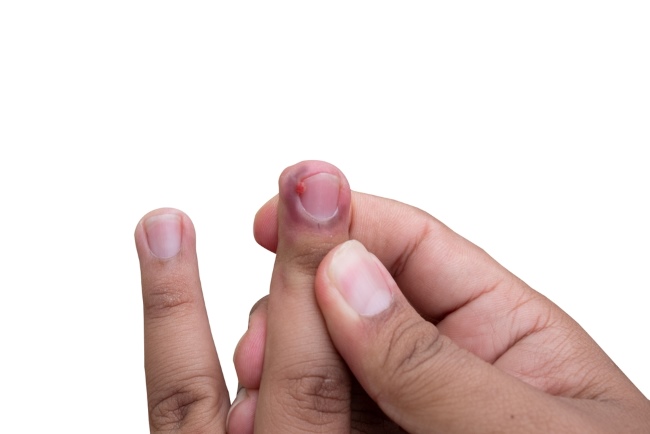
Purulous ingrown toenails that occur on the fingers cannot be considered trivial because they can cause complications, especially if you suffer from diabetes. Therefore, it is necessary to treat festering ingrown toenails on the fingers appropriately and appropriately to prevent this condition from getting worse.
Various ways to treat festering ingrown toenails on the fingers
The following are several ways to treat festering ingrown toenails on the fingers that you can try:
1. Soak your hands in a salt solution
So that festering ingrown toenails on your fingers heal quickly, it is important to keep the area of the nail that has the ingrown toenail clean and moist. To do this, simply soak your hands in warm water mixed with 1 cup of Epsom salt for 20 minutes. Do this 3–4 times a day.
Epsom salt is believed to have antibacterial properties which are useful in inhibiting the growth of bacteria that cause festering ingrown toenails. That way, ingrown toenails can heal more quickly.
2. Wash your hands with saline fluid
Apart from being used for infusion, saline fluid (NaCl) can also be used to treat festering ingrown toenails. This liquid is generally used as a cleaning fluid to clean festering ingrown toenails on the fingers so they heal more quickly.
To do this, pour saline onto the finger that has the ingrown toenail then dry the finger by pressing gently with clean gauze. You can buy this liquid as a way to treat festering ingrown toenails on your fingers freely at the pharmacy.
3. Apply povidone iodine
After cleaning your fingers, you can apply medicine containing povidone iodine. This antiseptic drug functions to inhibit the growth of bacteria so that the risk of infection in ingrown toenail wounds can be reduced. For maximum results, you can use this medicine 3 times a day.
4. Apply petroleum jelly
As mentioned previously, so that festering ingrown toenails on your fingers disappear quickly, you need to keep the area of the ingrown toenail moist. Well, one way to keep ingrown ingrowns moist, as well as a way to treat festering ingrown toenails on your fingers, is to apply petroleum jelly.
Not only moisturize the ingrown toenail, apply it. petroleum jelly in ingrown toenails can also relieve pain due to festering ingrown toenails on the fingers.
5. Wrap your finger with a bandage
Next, you need to wrap the fingernail affected by the ingrown toenail with a bandage. This method is used to protect the ingrown wound from germs and bacteria. That way, ingrown toenails on your fingers heal more quickly.
Change the bandage every day and immediately when the bandage is dirty or wet to keep the wound clean and dry.
6. Take painkillers
If the pain caused by ingrown nails is unbearable, you can take painkillers that are sold freely in pharmacies, such as paracetamol and 400;">ibuprofen. These two drugs can relieve pain by inhibiting the production of prostaglandins which trigger pain.
7. Use antibiotic ointment
Applying antibiotic ointment can also be used as a way to treat festering ingrown toenails on the fingers. This ointment is able to eradicate the bacteria that cause festering ingrown toenails and relieve discomfort in the area.
It is quite easy to use. You only need to apply antibiotic ointment to the part of the finger affected by the ingrown toenail. However, remember, the use of antibiotic ointment must be as recommended by a doctor.
To prevent recurrent ingrown toenails, you are advised to maintain cleanliness and care for your nails well, such as cleaning nail clippers either before or after use, not cutting your fingernails too short, and cutting nails in a straight pattern.
If the various methods of treating festering ingrown toenails above do not provide maximum results or make the ingrown toenail worse, consult a doctor via Chat with a doctor to get treatment or referrals.
The doctor may recommend nail removal surgery, either partially or completely, depending on the severity ingrown toenail or the patient's health condition. This method has been proven to be effective in treating ingrown toenails and preventing them from recurring.
Label : Health


Comments
Post a Comment